How fast can sanitation equipment reach a Sarasota disaster site?
Speed depends on how early you call and where the site sits. If you reach out before landfall or before a flood peaks, emergency porta potty rental can often move same day. Once conditions turn, response slows because roads flood and crews have to reroute. That is why shelters and command posts in Sarasota should have a standing plan, not a scramble after the fact.
A single standard porta potty rental has a 60 to 70 gallon holding tank, which matters when disaster response means no working sewer line for days. For dozens of displaced residents in one location, that tank fills fast, so a service schedule matters as much as the delivery. OSHA 1926.51(c)(1) sets toilet ratios for work crews, requiring 1 facility for 20 workers or fewer, and disaster relief staging areas with cleanup crews or utility workers should follow that same math even though it is not a construction site in the technical sense. Shelters run on portable restroom rental counts driven by headcount, not by code minimums alone. North Sarasota sits about 3.0 miles northeast of downtown and is a common staging point for utility crews after storms, and Kensington Park, 4.6 miles northeast, has hosted similar setups.
Route access matters too. A roll-off delivery needs about 60 feet of straight clearance behind the truck, and disaster zones often have debris, downed limbs or parked emergency vehicles blocking that path. If your site has tight access, tell dispatch before the truck rolls, not after it turns onto the block.
What sanitation equipment do disaster shelters and relief sites actually need?
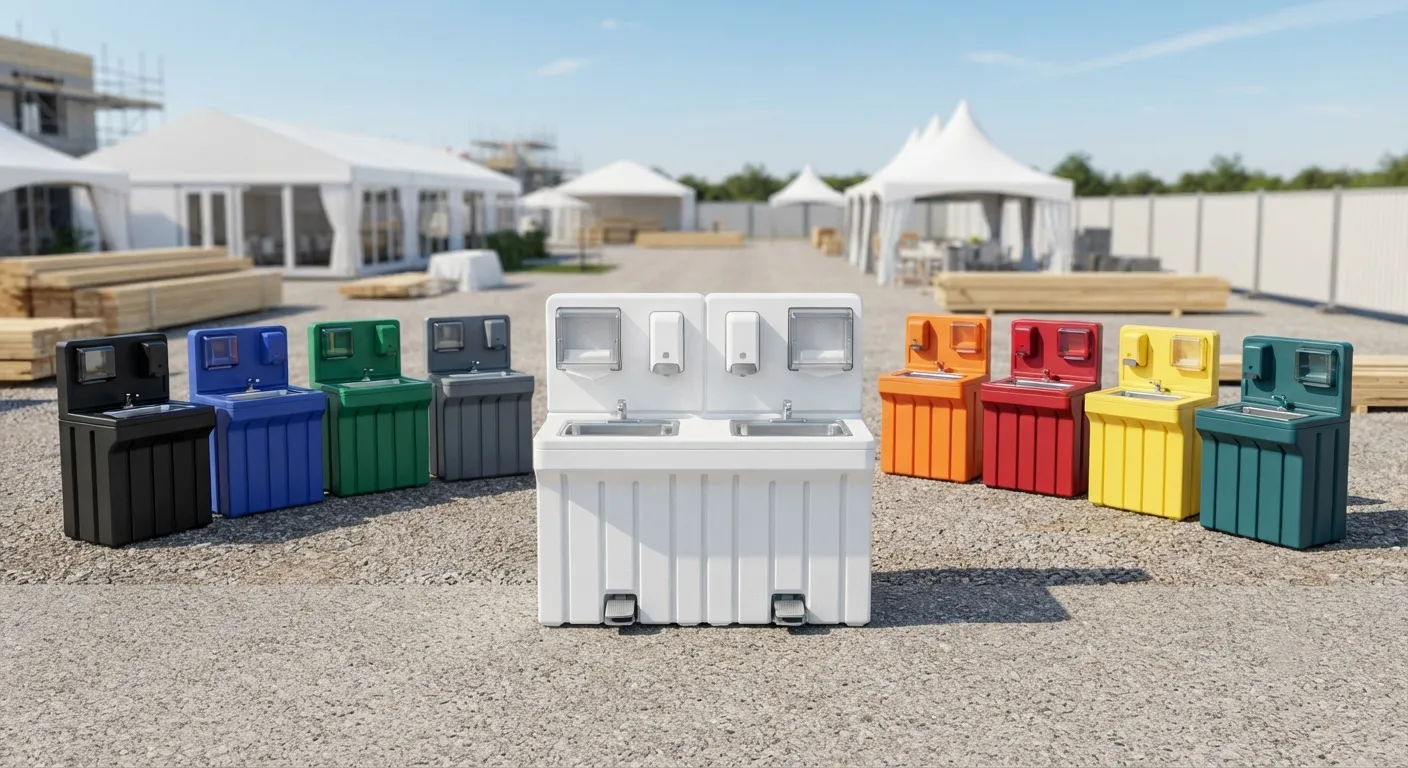
Most relief sites need three things: toilets, handwashing, and a way to manage waste from debris cleanup. A handwashing station rental is not optional when a shelter is feeding people and sanitation infrastructure is down. 29 CFR 1910.141(d)(2) requires washing facilities to have soap and towels or a hand-drying device, and hand sanitizer alone does not satisfy that standard, so a real sink setup matters more than a bottle of gel. A portable sink rental paired with toilets covers that gap fast.
For accessibility, at least one unit in a cluster of portable toilets should meet ADA Standards 213.2, which requires 5 percent of clustered single-user units to be accessible, with a minimum of one. Displaced residents include people with mobility limitations, and an ADA accessible porta potty is not a luxury add-on in that setting. It needs a 60 inch turning circle inside per ADA Standards 304.3.1, and a door opening of at least 32 inches per ADA Standards 404.2.3.
Debris cleanup generates its own waste stream. Storm debris, damaged drywall and downed limbs need a roll-off dumpster rental, and knowing what cannot go in a dumpster matters more during disaster cleanup than any other time, since propane tanks, paint cans and chemicals show up in storm debris piles constantly. A construction dumpster rental sized right avoids overflow before the next pickup.
Why do relief organizations need a sanitation plan before disaster strikes?
Because once flooding or wind damage hits, trucks cannot always reach every site, and equipment that is not already staged goes to whoever called first. Sarasota relief coordinators who set up contracts ahead of hurricane season get priority over walk-up requests once a storm is bearing down. Pinecraft, 3.7 miles east of downtown Sarasota, and Desoto Acres, 4.7 miles northeast, are both areas where pre-positioned equipment has cut response time compared to sites calling after the fact.
A temporary fence rental around a staging area keeps donated supplies and equipment secure, and crowd control barrier rental helps manage lines at distribution points. For command posts running generators and lighting after dark, a light tower rental and temporary power pole setup extends operating hours safely. Storage matters too: a storage container rental or mobile office trailer rental gives coordinators a dry, lockable space for donated supplies and paperwork.
Pricing during disaster response tracks the same bands as any rental, though delivery windows can carry a premium fee. Below is what a standard event-length setup looks like.
| unit | duration | typical price |
|---|---|---|
| standard | week | 200 |
| ada | week | 185 |
| delivery_fee | week | 100 |
For longer relief operations stretching past a week, a monthly porta potty rental often costs less per day than repeated weekly renewals. Check porta potty rental cost for a full breakdown by duration.
How many portable toilets does a shelter need?
It depends on headcount and hours of operation. OSHA 1926.51(c)(1) offers a baseline: 1 toilet for every 20 people. Shelters running 24 hours with high turnover should plan tighter than that ratio. Use how many porta potties do I need to work the math for your site.
Can you deliver sanitation equipment during an active storm warning?
Usually not once winds reach unsafe driving conditions. Crews stop delivery runs when road conditions turn dangerous. Call as early as possible, ideally before a storm warning is issued, so equipment is staged and ready rather than in transit.
Do disaster relief sites need ADA accessible units?
Yes. ADA Standards 213.2 requires at least one accessible unit in any cluster of portable toilets, and displaced populations often include people with mobility needs. See ADA restroom requirements for the full standard.
What happens to waste from storm debris cleanup?
It typically goes into a roll-off dumpster sized for the job. Check dumpster sizes and dimensions to match container size to debris volume, and confirm dumpster weight limits since wet debris weighs more than dry.
How quickly can Sarasota Porta Pros restock a shelter's toilets?
ANSI/PSAI Z4.3 sets a baseline of one service visit weekly for up to 10 users, but shelters need tighter cycles. High-use disaster sites often need daily service. Call request a quote to set a schedule matching your headcount.
Next step
Get a delivery date
Tell us the address, the dates and the headcount. We size the order and confirm the route.