
How many restrooms does a race need?
Runner count and course shape decide the number, not a rule of thumb. OSHA 1926.51(c) sets construction ratios, but races are different: you are placing restrooms where people cluster, not where they work an 8 hour shift. Start lines and finish chutes need the heaviest coverage since that is where runners bottleneck before and after. Aid stations along the marathon and race restrooms route need at least one standard porta potty each, more if the station also serves a water stop or medical tent. For a race expecting 1,500 to 2,500 runners, most organizers in Sarasota land somewhere between 15 and 25 standard units total, split across start, finish, and two or three aid points. Under ADA Standards section 213.2, where units are clustered, at least 5 percent of that cluster has to be accessible, and never fewer than one unit per cluster. That means even a small aid station with three standard units still needs one ADA unit standing next to them. We size this out on a request a quote call once we know your route map and expected field size, and you can cross-check ballpark counts on our how many porta potties do I need guide before you call.
Where should restrooms go on a race course?
Restrooms belong at the start corral, the finish chute, and every aid station, not scattered by guesswork. The start line takes the biggest bank of units, because a nervous crowd waits there for 20 to 40 minutes before the gun. Finish line units matter just as much: runners finish dehydrated and need restrooms fast, so we stage those close to the chute exit, not past the medical tent. Along the course, aid stations every few miles typically get one standard porta potty or ADA accessible porta potty pair, depending on how the road narrows at that mile marker. A standard unit runs about 44 by 48 inches on the ground and stands roughly 92 inches tall, so we check clearance before drop-off, especially on narrow shoulder roads. If your route runs near Sarasota's downtown corridor or out toward the North Sarasota area 3.0 miles northeast, we walk the course map first. Placement also depends on truck access: our delivery trucks need about 60 feet of straight clearance behind the vehicle to unload safely, which rules out some tight cul-de-sac aid stations. See our full porta potty placement guide for how we work around curbs, grass, and slope.
Do race organizers need power or lighting for restrooms?
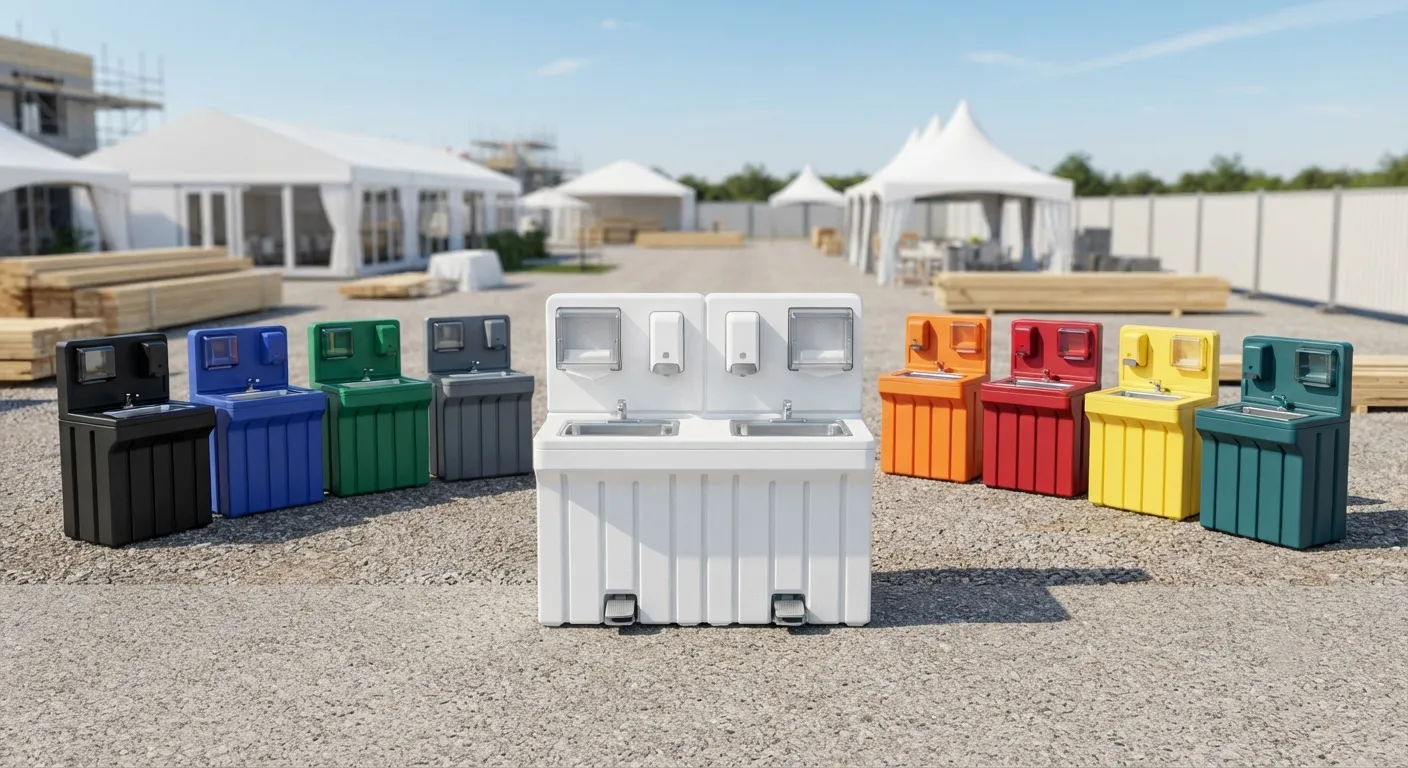
Most daytime races don't need power at the restrooms, but early starts and evening finishes often do. A 6 a.m. marathon start in Sarasota means racers are lining up in the dark, so we bring light tower rental units to the start corral and staging area. If your event also runs a finish-line stage, timing tent, or medical station, you may need a temporary power pole rather than a generator alone, and knowing how to brace a temporary power pole matters as much as ordering one. If you're bracing a temporary power pole on soft ground near a start line, guy it at two points minimum and stake into compacted soil, not loose fill, since race-morning wind and foot traffic near the corral can knock a loose pole over before dawn. We also stage handwashing station rental units at aid stations serving food or gels, since 29 CFR 1910.141(d)(2) requires soap and towels or a hand-drying device at washing stations, not sanitizer alone. For races that finish near a venue with vendor tents, a temporary fence rental can route runners around restroom lines and keep spectators clear of the corral. Barricades used for crowd lanes should meet OSHA 1926.202's ANSI D6.1 standard where our crews set them near active work zones.
| unit | duration | typical price |
|---|---|---|
| standard | event | $400 |
| ada | day | $230 |
| trailer | event | $3,500 |
Pricing above reflects typical event-rate bands; final quotes depend on unit count and course length. For a full breakdown see porta potty rental cost or restroom trailer rental cost if your finish line needs a restroom trailer rental instead of standard units.
How far in advance should we book race restrooms?
Book as soon as your course map and runner estimate are set, ideally 60 to 90 days out for a marathon-sized field. Race weekends compete with weddings and festivals for the same trucks. Confirm counts again two weeks before race day once registration numbers firm up.
Can we get ADA units at every aid station?
Yes, and you should. ADA Standards section 213.2 requires at least one accessible unit per cluster, never fewer, even at a small three-unit aid station. We recommend pairing each aid station's standard bank with one ADA accessible porta potty so no runner is stuck without access.
Do you service restrooms mid-race?
For long race days with an early start and late finish, yes. We schedule a mid-day service pass at high-traffic aid stations so tanks don't run over before the last runners pass through. Fast 5Ks rarely need this.
What if our finish line runs near a public street?
We check clearance and staging with the city before delivery. Placement in the public right of way needs confirming with Sarasota directly; we don't guess on that. Ask us during your request a quote call and we'll flag it early.
Can restrooms serve both runners and spectators?
Yes, but count both groups when sizing your order. Spectator zones near the finish line often need their own bank of standard porta potty units separate from runner-designated ones, especially if families are waiting an hour or more for a finisher.
Next step
Get a delivery date
Tell us the address, the dates and the headcount. We size the order and confirm the route.